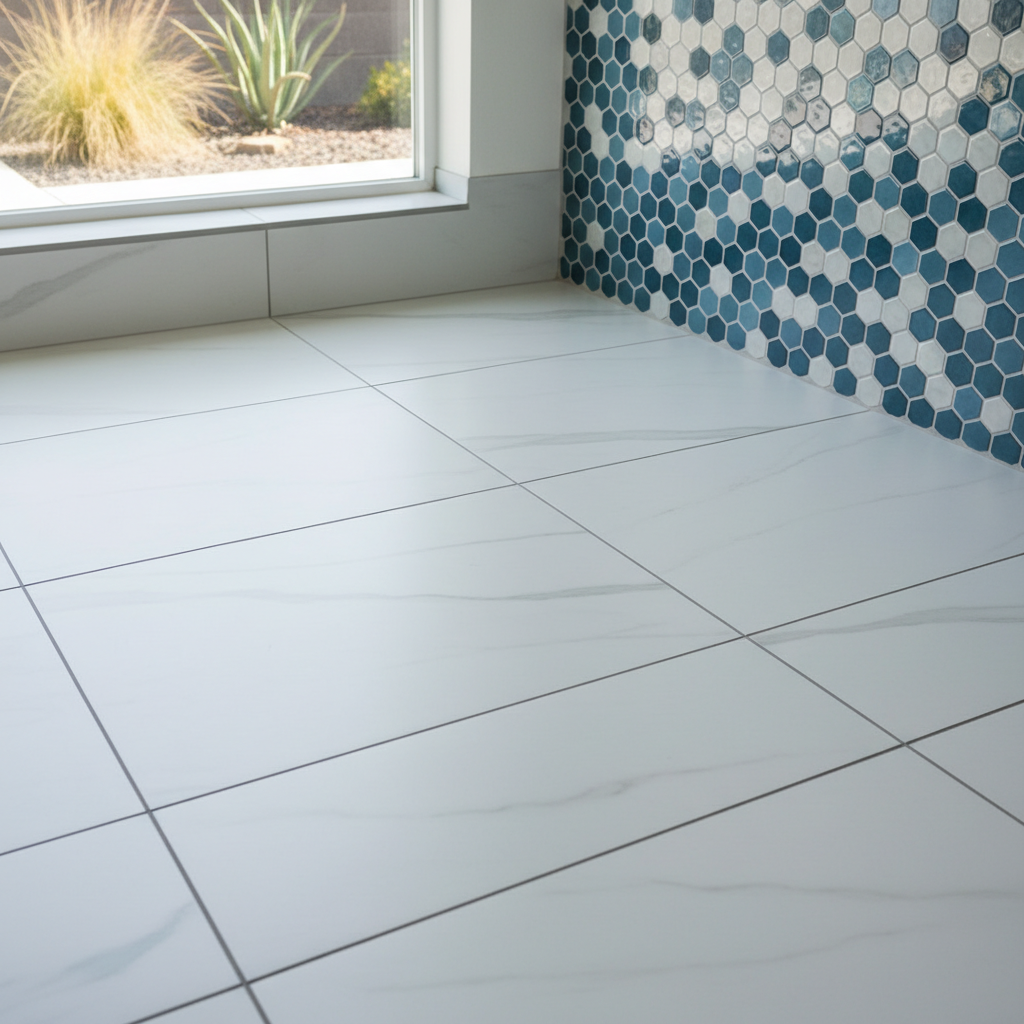
Alright, let's talk floors. Folks around Buena Park ask me a lot about putting in new tile or other flooring. It's a big decision, and you really want to get it right, don't you? So, I figured I'd tackle some of the most common questions I hear. No fluff, just straight answers from someone who's been doing this for a while.
Do I really need to remove the old flooring, or can I just tile over it?
This is probably the number one question I get. And look, sometimes — *sometimes* — you can tile over existing flooring. But most of the time? You really shouldn't. Here's why: your new tile needs a perfectly stable, level, and clean subfloor to last. If you tile over old linoleum, vinyl, or even another layer of tile, you're basically inheriting any problems that old floor had. Uneven spots, movement, trapped moisture – all that can show through and cause your new tile to crack, lift, or grout to fail.
Think about it for a second. If your old vinyl has a soft spot, your new tile will eventually have one too. If your old tile has a crack, that crack's likely coming right through your new tile. It's almost always worth the extra effort and cost to rip out the old stuff, inspect the subfloor, and prep it properly. You'll thank me in five years when your floor still looks great.
What's the deal with subfloor preparation? Is it really that important?
Absolutely, it's critical. I can't stress this enough. Your subfloor is the foundation for your new floor. If it's not right, nothing else will be. For tile, we're talking about making sure it's flat, structurally sound, and doesn't move. If you've got a wood subfloor, we might need to add an extra layer of plywood or cement board to give it the rigidity tile needs. If it's concrete, we're looking for cracks, uneven spots, and moisture issues.
We use leveling compounds to smooth out any dips and humps. We check for squeaks and secure loose boards. For tile, especially, any flex in the subfloor is a recipe for cracked grout and popped tiles down the road. Don't let anyone tell you they can just slap tile over a bouncy or uneven floor. They're cutting corners, and you'll pay for it later, trust me.
How long does a typical tile installation take?
That's like asking how long a piece of string is, right? It totally depends on the size of the area, the type of tile, how complex the pattern is, and how much prep work we need to do. A small bathroom floor, say 5x8 feet, with basic 12x24 inch tiles and minimal prep, might take a day or two for the actual tile setting, plus another day for grouting. A larger kitchen or multiple rooms with intricate patterns, like a herringbone or mosaic, could easily be a week or more.
Remember, there are drying times too. Thinset needs to cure before grouting, and grout needs to cure before heavy use. We always factor that in. I'd say for most average-sized bathrooms or kitchens in Buena Park, you're probably looking at 3-5 days from start to finish, including demo and cure times. We'll give you a much more accurate timeline once we actually see the space.
What's the difference between porcelain and ceramic tile? Which one should I choose?
Good question, and it's one I get all the time. Both are made from clay and fired in a kiln, but porcelain is generally denser, less porous, and more durable than ceramic. Think of it this way: porcelain is like the tougher, more resilient cousin.
Porcelain is usually a better choice for high-traffic areas, like kitchens and entryways, or anywhere that might get a lot of moisture, like a shower floor. It's also more resistant to chips and scratches. Ceramic is a bit softer, easier to cut, and often more budget-friendly. It's perfectly fine for walls, lighter traffic areas, or places where you're not worried about heavy impacts. For most floors, especially in a busy family home, I usually recommend porcelain for its longevity. It's just a better investment over time, plain and simple.
Can I use the same tile on the floor and the shower walls?
You absolutely can, and it's a popular choice for a cohesive look. Just make sure the tile you pick is suitable for both applications. For floors, especially in a shower, you need a tile that's rated for wet areas and has good slip resistance. Porcelain is usually a safe bet here. For walls, you have a bit more flexibility, but using the same tile creates a really clean, continuous aesthetic.
The key for showers, though, isn't just the tile itself. It's the waterproofing behind it. That's where Buena Park Bathroom Solutions really shines. We use top-notch waterproofing systems – think Schluter Kerdi or similar – to make sure no water ever gets behind those tiles and into your walls. The tile is just the pretty face; the waterproofing is the real hero, honestly.
Why do grout lines crack, and how can I prevent it?
Grout cracks for a few main reasons. The biggest one is movement in the subfloor. If your floor isn't rigid enough, the tiles will shift slightly, and that rigid grout just can't handle it. Another common culprit is improper mixing or application of the grout itself – too much water, not enough compaction. Sometimes, it's just normal house settling over many years. Also, using sanded grout where unsanded is needed (or vice-versa) can cause issues, especially with very thin grout lines.
To prevent it, you need to start with that solid subfloor we talked about. Use the right type of grout for your tile and joint width. Make sure it's mixed correctly and packed tightly into the joints. And once it's cured, sealing your grout, especially in wet areas, helps protect it from moisture and stains, which can also contribute to deterioration. It's not a magic bullet, but good installation practices and proper sealing go a long way.
What's the deal with expansion joints? Do I need them?
Yes, you absolutely need them, especially in larger tiled areas. Tile and grout, like most building materials, expand and contract with changes in temperature and humidity. If you lay a huge field of tile without any breaks, that stress has nowhere to go. Eventually, it'll buckle, crack, or pop up. Expansion joints, also called movement joints, are basically flexible gaps left in the tile field and filled with a flexible sealant, like silicone caulk, instead of rigid grout.
They're typically placed around the perimeter of a room, where the tile meets a wall or another surface, and sometimes within the field of a very large room. For example, in some of the older, larger ranch-style homes we see in Buena Park, especially with concrete slab foundations, we'll often recommend expansion joints every 15-20 feet in a long hallway or open-concept living area. They allow the floor to breathe and move naturally, preventing those stress-related failures. It's a small detail that makes a huge difference in the longevity of your floor.